
Hokkaido National Parks
Hokkaido National Parks are some of the oldest and most stunning in Japan. The four seasons are very distinct and the atmosphere of the landscape is always changing quite dramatically and the National Parks provide a great way to explore the beauty of the seasons here in Hokkaido.
Hokkaido is home to six national parks, each showcasing a different side of Japan’s wild north, from volcanic peaks and alpine trails to coastal cliffs and vast wetlands. Whether you’re hiking in Daisetsuzan National Park or spotting wildlife in Shiretoko National Park, these protected landscapes offer some of the most untouched and scenic nature in the country.
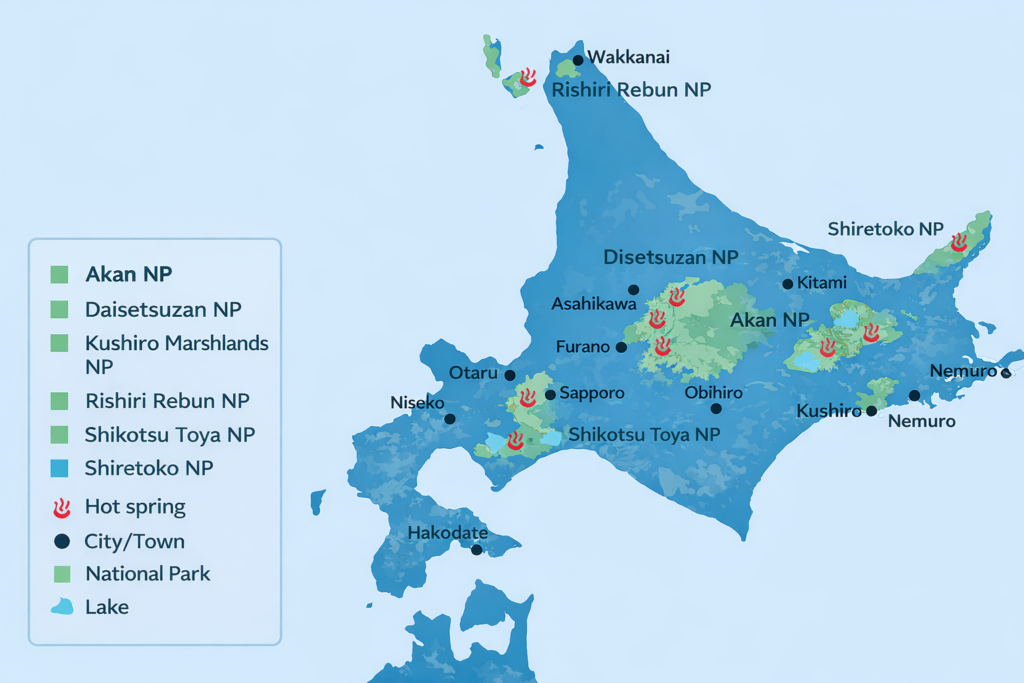
* Daisetsuzan National Park, with an area of 2309 sq km, is the biggest national park in Japan. It has a diversity of mountains and volcanoes, rivers and steep gorges, waterfalls, lakes and animals.
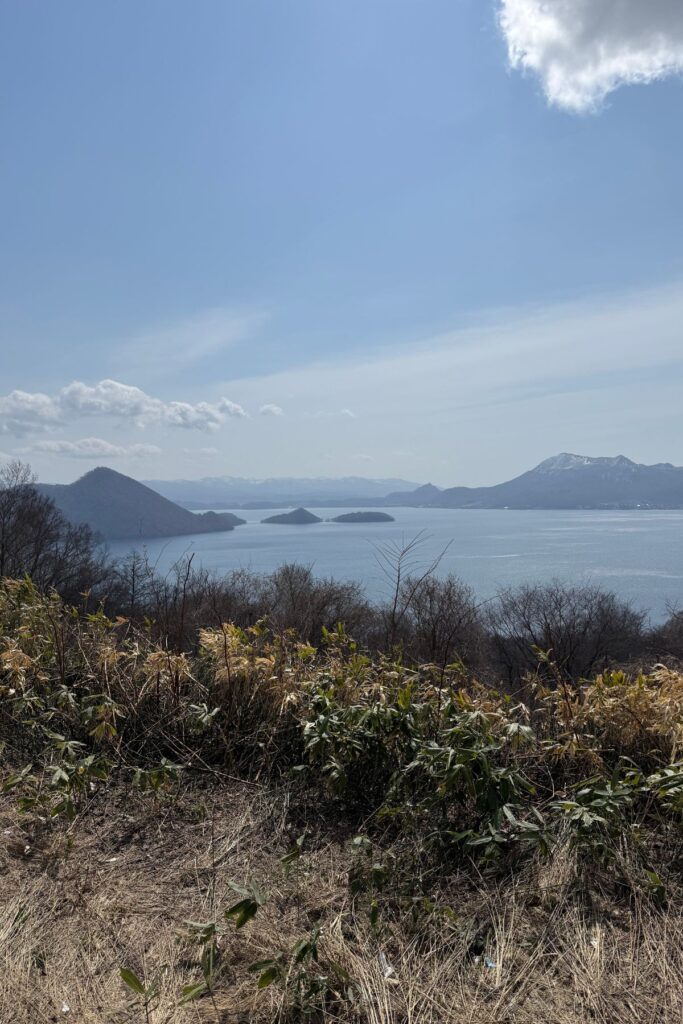
* Shikotsu-Toya National Park is known for its two big lakes and the volcanoes that stand beside them. A national park in the western part of the island of Hokkaidō, Japan. Named after the volcanic caldera lakes of Lake Shikotsu and Lake Tōya.
* Akan National Park has perhaps Hokkaido’s most beautiful lakes, situated next to two active volcanoes, Mr and Mrs Akan. These crystal clear lakes are famous for the rare and unusual type of spherical green algae that grow there – ‘Marimo’. Growing at a rate of 5mm per year, marimo as big as 30cm in diameter can be found in Akan, making them the largest in the world.
* Shiretoko National Park is the untouched wilderness of Hokkaido. It features the hot spring waterfall ‘Kamuiwakka’, ice-floats drifting along the coast in winter and the largest winter population of the rare Steller’s Sea Eagle.
* Kushiro Marshlands National Park, is a wild bird sanctuary, of which 7 species in this area are designated Natural Treasures. This includes the endangered Japanese crane, famous for its synchronised mating dance.
* Rishiri Rebun National Park – This consists of the two islands off the north of Hokkaido. Mt Rishiri Fuji is a volcano so named because it is a smaller version of Mt Fuji. Rebun Island is the land of flowers as hundreds of species of alpine plants bloom in spring and summer.
